
Self-Defense in Healthcare, Part 6: Questions Bouncing Around in My Head
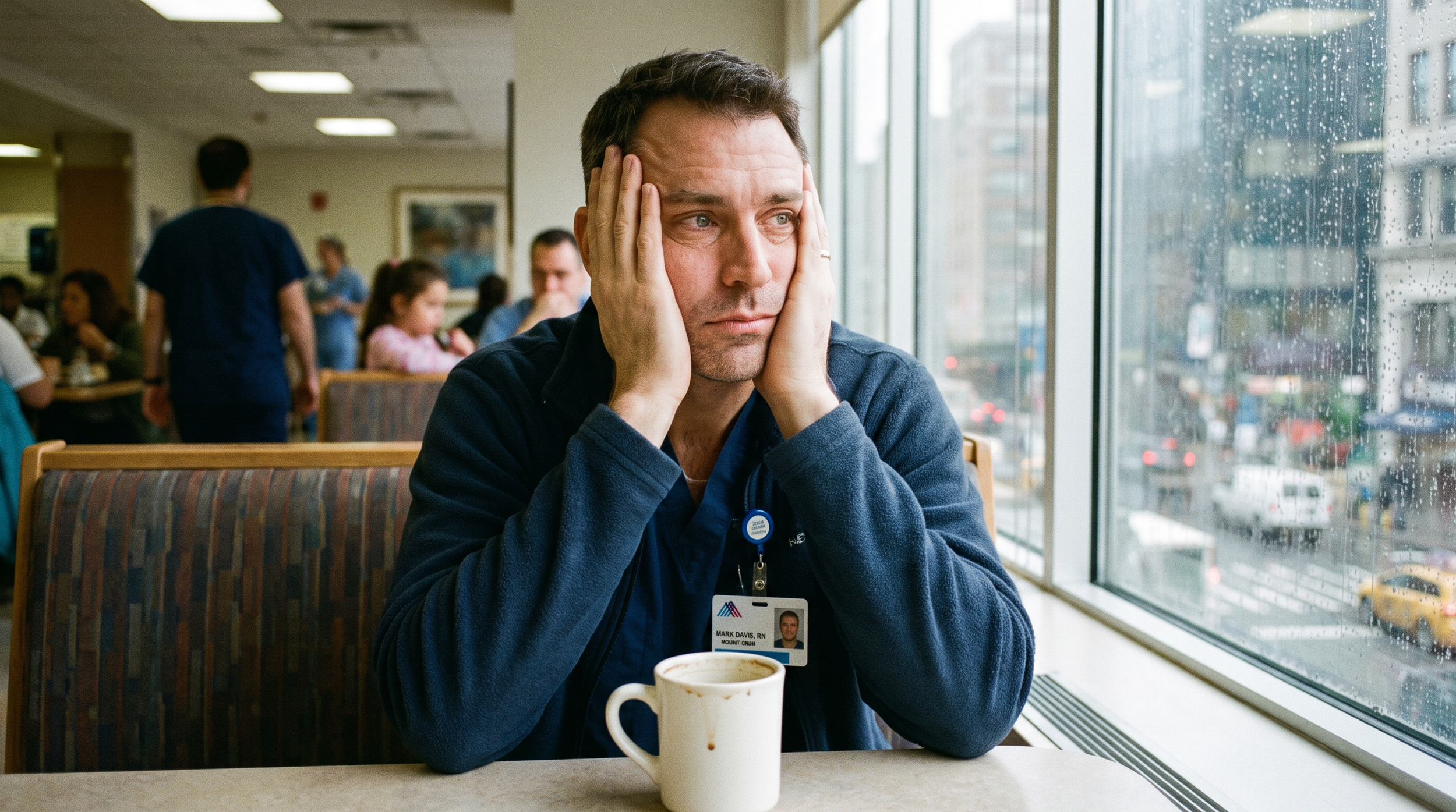
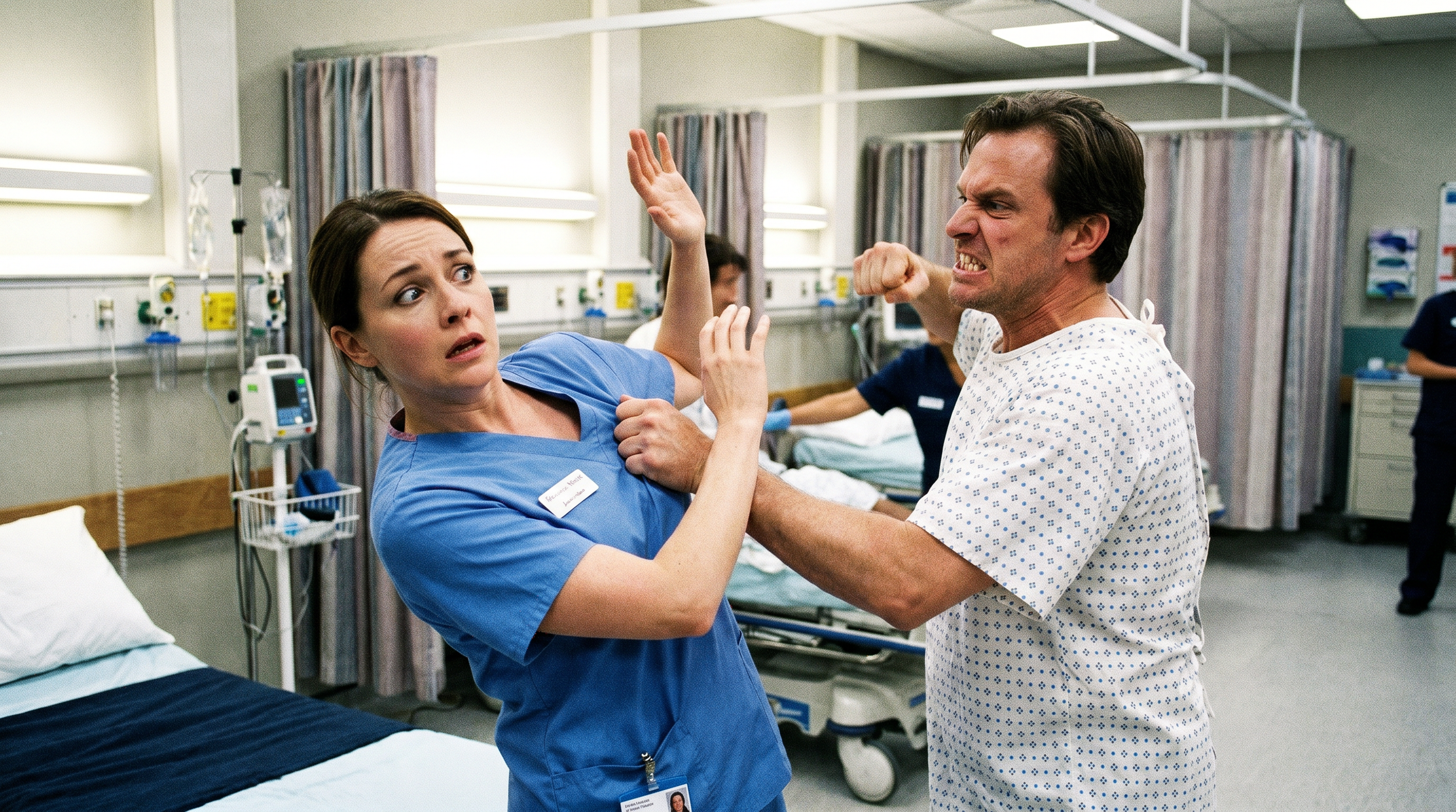
Bringing this newsletter series on self-defense in healthcare to a close, I have arguments and questions bouncing around in my head...
Why is there fear to have a written policy that caregivers are allowed to use self-defense?
Fear of vigilantism.
Fear of the presence of weapons in the hospital, including concealed carry weapons.
Fear of promoting violence.
Fear of sending the wrong message to employees, and possibly to the public.
Fear of acknowledging that in rare instances, violence may be the only answer to the situation.
What about defending yourself against patients/people who do not have the "capacity" to know what they are doing is wrong?
From talking with a deputy district attorney, proving "guilty except for insanity" is very difficult and is rarely successful.
Most caregivers, in my opinion, know when a person is not in their right mind, and can explain the violent behavior. And quite frequently, caregivers do not report the assault and excuse the incident.
This article has some helpful information to consider when address violent behavior from people with Alzheimer's.
Does it seem society is leaning more towards promoting reasons why we should be excusing violent behavior, even to weaponize "trauma-informed care"?
Are we, thinking we are being kind and reasonable, allowing for, and even promoting, violent behavior from patients and visitors? Even when we know they have the capacity to know what they are doing can/will hurt someone?
Even if someone doesn't have the capacity to know what they are doing is wrong, do their rights override mine? Do I have to just take the physical violence/battery? Can I defend myself if I need to?
How much do organizations value justice?
How many organizations have wrap-around violence prevention programs? From in-depth, realistic training, to ongoing refreshers, to dedicated violence prevention program manager positions, to post-incident care - including actively supporting employees who seek justice by reporting the crime?
Justice, as an embodied core value, would involve taking the needed time to complete a thorough investigation, seeking out experts, analyzing the behaviors of all parties (patient/visitor, caregiver, organization) and coming to a fair conclusion.
Do healthcare employers even include their employees in their mission, vision, and core values?
What's the point?
The point is to do the right thing by your employees and the organization as a whole.
Self-Defense in Healthcare Part 5: How to Stay Out of the Courtroom
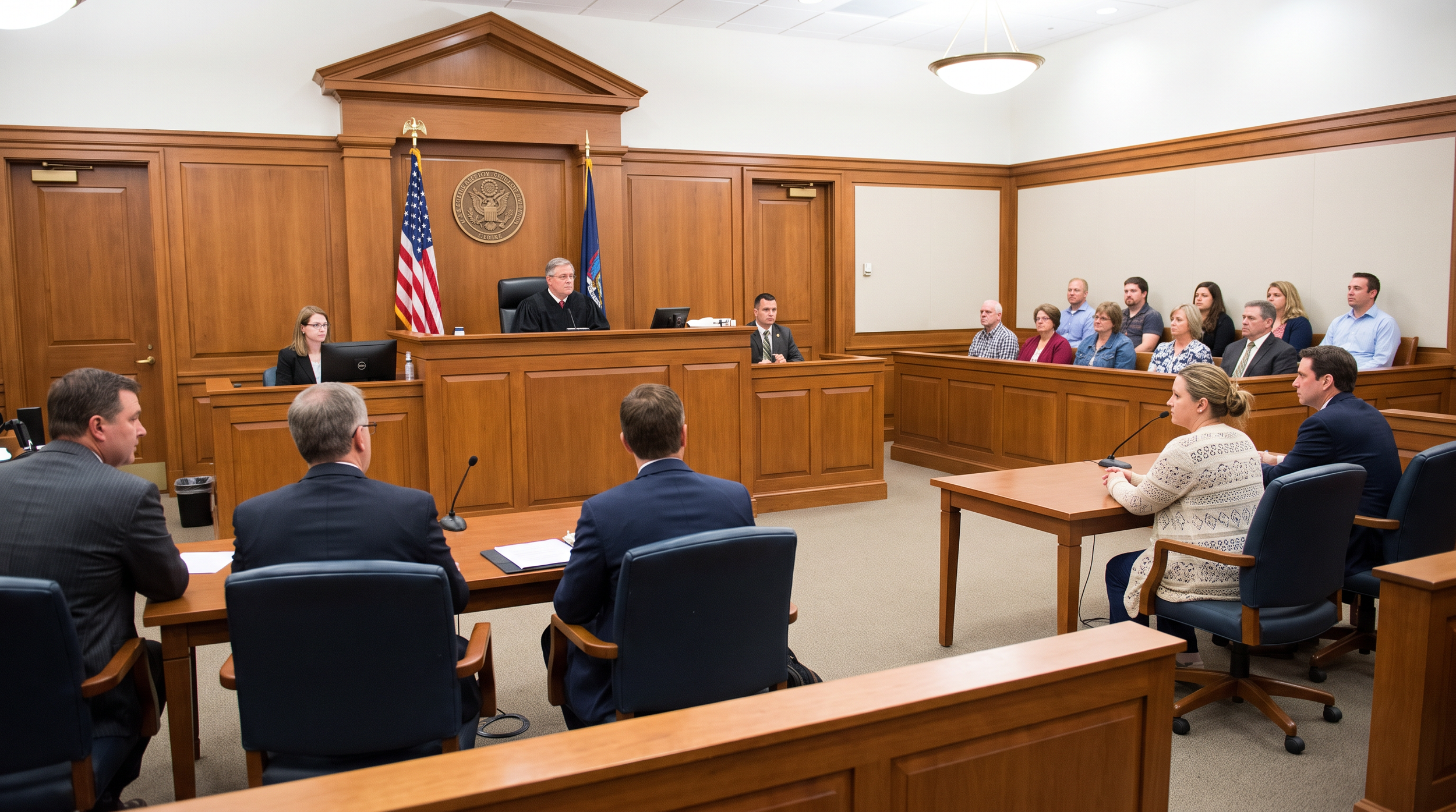
All of the Self-Defense newsletter editions have led up to this point; how to avoid legal problems after a self-defense event in the healthcare setting. (If you missed them, go back and check them out.)
The healthcare employer should ensure the investigation is thorough and scrutinizes the organization just as much as, if not more than, the employee involved. And they should include experts in use of force or self-defense, as healthcare leaders are not the experts in this area. Yes, that means you might have to hire an outside consultant.
If the organization fell short, own it - and say so directly to the employee involved.
Communicate with the affected employee - you'll be surprised how much simple communication can assuage fears and decrease the likelihood of a future civil lawsuit. Tell them where you are at in the investigative process. If you place them on administrative leave, tell them it is not punitive.
If hospitals provide violence prevention and self-defense training, they should allow for any and all techniques to get out of a violent situation. Especially in a true self-defense situation, any technique should be allowed to be used, even those not taught in the violence prevention education.
So how do you build accountability without punishing justified self-defense? Just Culture.
What is Just Culture? It is a structured model which helps to determine where the accountability lies between an individual and an organization after a safety event. Could a decision guide like this keep all parties out of the courtroom? Absolutely.
How could a Just Culture styled algorithm help in situations where violence is met with violence?
It utilizes a standardized tool.
It decreases variation in investigations.
It acts as a forcing function to ask all the pertinent investigation questions. (Editions 3 and 4 of this newsletter contain the exhaustive list of questions that should be considered from the aspect of the involved employee and the organization.)
It standardizes fairness for both the employee and the organization.
It guides potential immediate and future actions to consider for both the employee and the organization.
It decreases risk.
Are you interested in seeing how a decision guide could work in your organization? I'm piloting the Violent Encounter Decision Guide with a small group of healthcare leaders and safety professionals before a wider release. Early access, ~ 30 minutes of your time, and your feedback shapes the final tool. Contact me through the website and I'll walk you through it.
Disclaimer: This is not legal advice.
Self-Defense in Healthcare, Part 4: Fair Analysis of the Organization
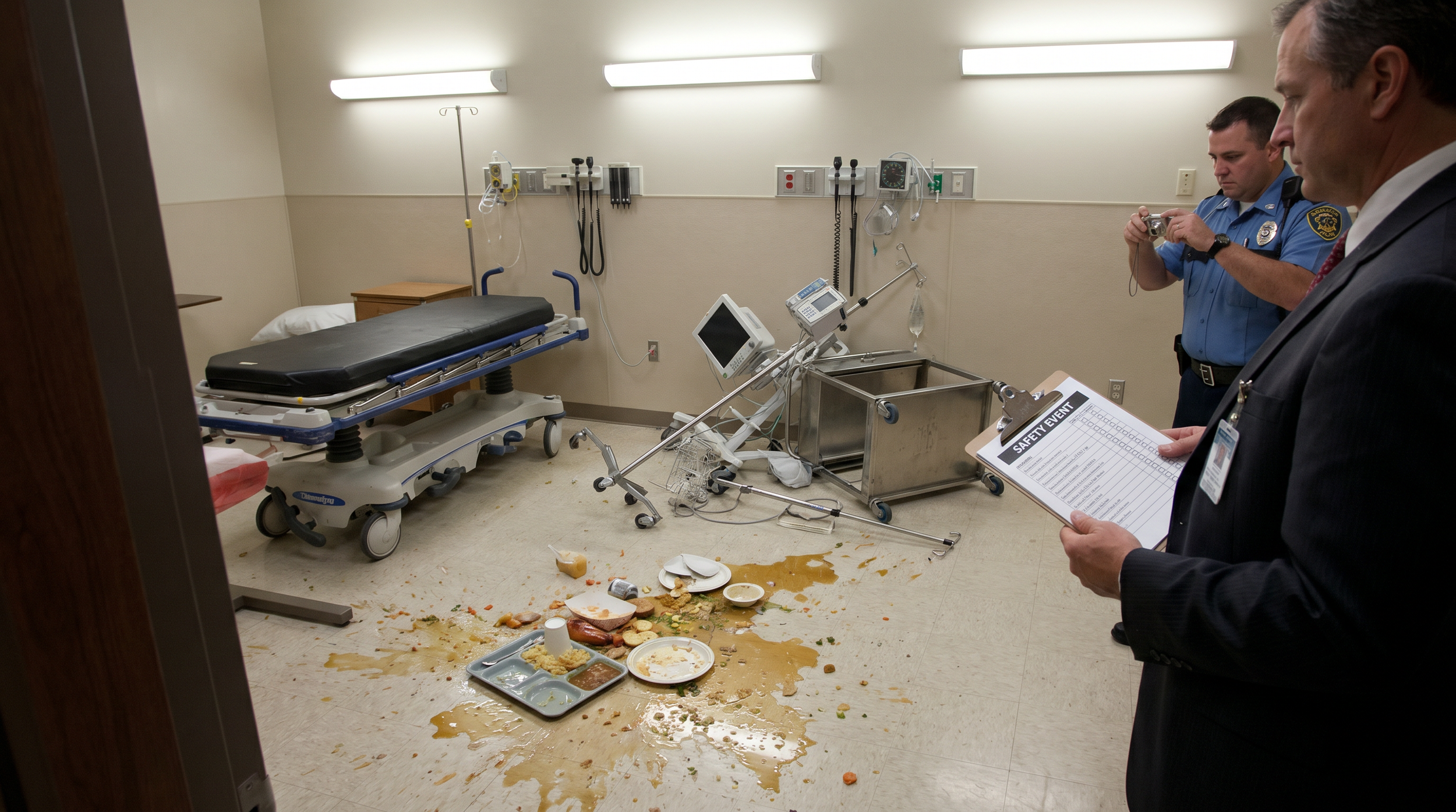
As in Part 3, let's say the incident has happened. The patient attacked the nurse, the nurse fought back, everybody is being taken care of and it's been a couple hours.
To investigate and analyze the situation thoroughly and fairly from the organization's perspective, the below questions must be considered.
Spoiler alert - there's many more questions than those posed for the employee. There's reasons for that, but the overarching theme is that the organization is responsible for providing a work environment that is safe from known hazards, which includes violence (OSHA's General Duty Clause).
The overarching question for the organization is, Why was this caregiver in a position where physical self-defense became necessary?
Have Risk Management, HR, and Legal been notified?
Is a 48-hour discipline hold in place? Meaning, no hurried employment decisions until an investigation is performed.
Has the scene been preserved appropriately?
Does the organization have an incident response protocol for use-of-force events?
Will this incident require regulatory notification (OSHA, state health dept)?
Was the aggressor a patient with a documented psychiatric diagnosis, cognitive impairment, dementia, or substance intoxication?
Was the violent behavior a known or foreseeable symptom of the patient's condition?
Was the violence purposeful and directed, or a reflexive/uncontrolled physical response (e.g., seizure, post-ictal state, medication reaction)?
Was the patient legally competent to be held responsible for their actions?
Was the aggressor a visitor rather than a patient — and if so, what was their relationship to the patient?
Were weapons involved — improvised or otherwise?
Was the patient's/visitor's violence risk formally assessed on admission or during the encounter?
Was there a behavioral care plan addressing potential violence — and was it communicated to the caregiver?
Had the patient exhibited prior violent behavior during this encounter or in previous admissions?
Was the violent act spontaneous and unpredictable, or did it follow an escalating pattern with warning signs?
What was the severity of the threat — risk of minor injury vs. serious bodily harm or death?
Was adequate security staffing present or accessible in a timely manner?
Were panic buttons, call systems, or other safety mechanisms available and functional?
Was the physical layout of the area designed to minimize violence risk (clear sightlines, no entrapment zones, accessible exits)?
Was the caregiver working alone, understaffed, or in an isolated area at the time?
Had there been prior violent incidents in the same unit — and had the environment been modified in response?
Was adequate security personnel present or available?
Was the patient/visitor's violence risk assessed and documented prior to the incident?
Was the environment designed to reduce violence risk (sight lines, panic buttons, escape routes)?
Was staffing adequate for the acuity of the patient population?
Was an Emergency Response protocol in place — was it activated — did it fail?
Had there been prior violent incidents in this unit that went unaddressed?
Did the organization have a clear use-of-force policy that defined what constitutes lawful defensive action?
Does the policy distinguish between prohibited aggression and lawful self-defense?
Was the caregiver trained in de-escalation AND in recognizing when de-escalation has failed?
Are caregivers explicitly told what they are authorized to do when they face an imminent threat?
Was the caregiver following, deviating from, or acting in the absence of an established policy?
Does the organization's "zero tolerance" policy inadvertently penalize defensive force?
Has the organization historically conditioned caregivers to absorb violence as an occupational norm?
Has the organization previously disciplined caregivers for similar defensive actions — creating a chilling effect?
Has the organization clearly communicated that the caregiver's life and safety has equal moral worth to the patient's?
Does the organization's response to this incident reflect its stated commitment to staff safety?
Will the organization stand behind the caregiver legally if the patient or visitor pursues civil action?
Does applicable state law recognize a public policy wrongful discharge claim for self-defense? (cf. Ray v. Wal-Mart, Moreno v. Circle K. Stores)
If termination is being considered: did the caregiver have a realistic opportunity to withdraw? If not, termination may constitute wrongful discharge.
Is the discipline being considered consistent with how comparable incidents have been handled across the organization?
Has legal counsel reviewed the decision before any termination is issued in a self-defense case?
Are all witnesses, video reviewed, and environmental factors documented?
Is the behavior classification documented with supporting reasoning — not just a conclusion?
Are all organizational failures documented alongside the caregiver findings?
Is the documentation trail sufficient to demonstrate a non-arbitrary, consistent decision-making process?
Has the organization applied this same level of review to prior similar incidents?
Is the caregiver being treated with the same procedural fairness afforded to other employees in disciplinary matters?
Is the organization documenting its own accountability findings with the same rigor as the caregiver's behavioral review?
Has the finding been communicated directly and in writing to the caregiver with a clear explanation of the reasoning?
Are there patterns of violent incidents on specific units, shifts, or with specific patient populations?
Has this type of incident occurred before — and were systemic changes made?
Is workplace violence being accurately reported — or is underreporting masking the true scope of the problem?
Has the organization benchmarked its violence rates against OSHA/NIOSH data for comparable facilities?
What systemic changes are indicated to prevent a recurrence of the conditions that led to this incident?
Has the use-of-force policy been reviewed and updated to reflect lessons from this incident?
Has training been updated to explicitly address the threshold at which defensive force is legally and ethically justified?
Have environmental modifications been made to reduce entrapment risk and improve security response time?
How will the findings of this review be communicated to the involved unit and leadership — without compromising the caregiver's privacy?
Has the organization publicly affirmed that caregiver physical safety is of equal value to patient safety?
Does the organization's communication after this incident reinforce or undermine caregivers' confidence in their right to self-defense?
Has this incident been included in quality/safety reporting infrastructure for organizational learning?
Self-Defense in Healthcare, Part 3: Fair Analysis of the Employee's Actions
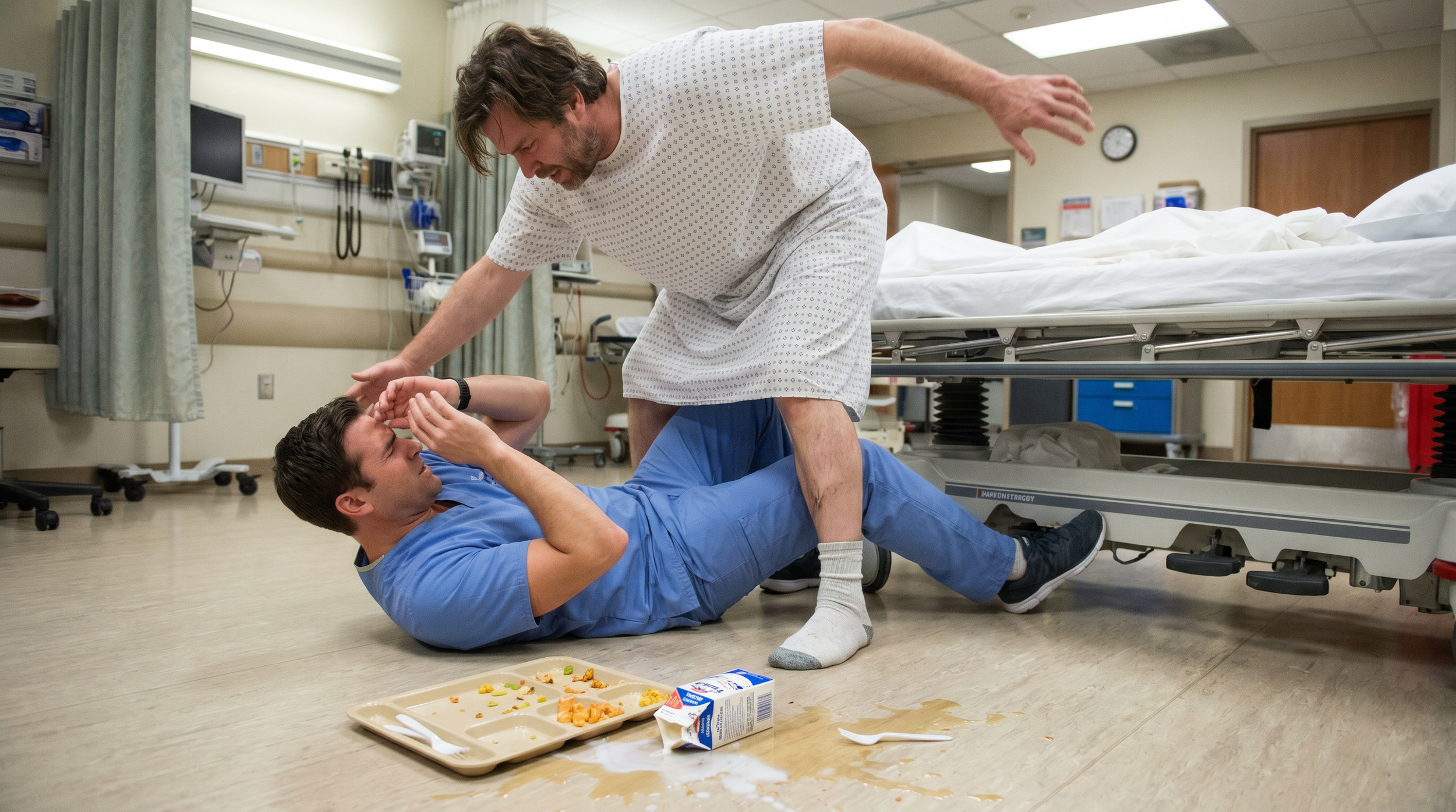
Let's say the incident has happened. The patient attacked the nurse (or tech, CNA, doctor, etc.), they fought back, everybody is being taken care of, and it's been a day since the incident.
The investigation and analysis of the event must be thorough and fair. When considering the the employee's perspective, the below questions should strongly be considered.
Is the caregiver physically injured and receiving care?
What is the caregiver's current psychological state?
Has the caregiver been offered immediate psychological first aid?
Was the caregiver acting within the scope of their employment at the time of the incident?
Is the caregiver being treated as a witness and subject of support — not as a suspect?
Has the caregiver been clearly told what the investigation process will look like?
Was anyone physically harmed — caregiver, patient, visitor, or bystander?
What type of force was used (blocking, restraining, striking)?
When and where exactly did the incident occur (unit, time of day, staffing context)?
Were there witnesses present? Have they been identified and preserved?
Is video surveillance coverage available for the area and has it been saved for evidence and further analysis?
Is there body-worn camera footage available and has it been saved for evidence and further analysis?
Was an emergency response activated — and did it arrive in time?
Was there an objectively reasonable belief that bodily harm was imminent?
Was the threat directed at the caregiver, a colleague, another patient, or a visitor?
Was the threat verbal only, or had it escalated to physical contact or a weapon (even an improvised weapon)?
Was the level of force used proportionate to the threat perceived?
Did the use of force cease once the threat was neutralized?
Was the caregiver trained in de-escalation techniques?
Was the caregiver trained in recognizing when de-escalation has failed and a physical response may be warranted?
Had the caregiver received training in defensive techniques or breakaway techniques? If so, how often did they receive the training?
When was the caregiver's last violence prevention training — was it adequate for this clinical environment?
Did the training explicitly address what constitutes an appropriate, lawful defensive response?
Was the caregiver working alone, understaffed, or in an isolated area at the time?
Was there a safe and realistic path of retreat available to the caregiver?
Was the caregiver physically cornered, restrained, or otherwise unable to withdraw?
Was withdrawal attempted — and if so, is this corroborated by witnesses or video?
Was calling for help a realistic option given the speed of the escalation?
If the caregiver did not attempt retreat, can they explain why — and is that explanation plausible in context?
Did the caregiver intend to use force, or was it a reflexive, unplanned response?
Was the caregiver aware at the time that alternatives to physical force were available?
Did the caregiver consciously choose force despite knowing it was unnecessary?
Did the caregiver express any intent to harm the patient/visitor prior to or after the incident?
Is the caregiver's account of events internally consistent — and is it corroborated by available evidence?
Now, to tee up Part 4 with a question:
Is the organization applying the same scrutiny to its own failures as it is to the caregiver's actions?
Self-Defense in Healthcare, Part 2: What is Self-Defense?
In an interesting update, the Colorado Supreme Court (just like the Utah Supreme Court) recently recognized that there is a right to self-defense in the workplace for which employers may not terminate workers as long as self-defense is lawfully used. The case was Moreno v. Circle K Stores, Inc. and the majority opinion was that the right to self-defense stemmed from pre-statehood days.
"It makes no sense to suggest that everyone has an inalienable right to defend themselves if faced with imminent danger, unless they are at work," wrote Berkenkotter [one of the justices]. "Rather, the right follows the employee from home to work and back and everywhere in between."
When talking on the topic of self-defense in healthcare, I know people are thinking, "But employees need to de-escalate." Yes, there's some truth to that. But let's be real - there are limitations to de-escalation. That's a whole other topic.
Let's talk about what self-defense is.
In plain language, self-defense is fighting back when someone is trying to hurt, maim, or kill you. The goal is to reduce or stop the attacks so that you can get away alive. You can use self-defense for someone else.
But a good rule of thumb is to get out of the situation before it escalates to violence, if you can.
In Oregon...
To get more technical, here's Oregon's definition: "Except as provided in ORS 161.215 (Limitations on use of physical force in defense of a person) and 161.219 (Limitations on use of deadly physical force in defense of a person), a person is justified in using physical force upon another person for self-defense or to defend a third person from what the person reasonably believes to be the use or imminent use of unlawful physical force, and the person may use a degree of force which the person reasonably believes to be necessary for the purpose."
Here's when you CAN use self-defense against someone when they are:
Attempting to commit a felony involving the use or threatened imminent use of physical force
Committing or attempting to commit burglary in a dwelling
Using or about to use unlawful deadly physical force against a person
Those limitations are:
You can't initiate violence and claim self-defense (normally), EXCEPT if you withdraw or disengage and the other person then comes after you with unlawful physical force
The violence is "combat by agreement"
The violence is due to discovery of a persons actual or perceived gender, gender identity, gender expression, or sexual orientation
In Oregon, it has been required to teach self-defense in healthcare settings since 2008, which needs to include:
The amount of physical force that is reasonably necessary to protect the employee or a third person from assault; and
The use of least restrictive procedures necessary under the circumstances, in accordance with an approved behavior management plan, and any other methods of response approved by the health care employer;
And the employer cannot sanction an employee for using self-defense if the employee was:
Acting in self-defense in response to the use or imminent use of physical force;
Used an amount of physical force that was reasonably necessary to protect the employee or a third person from assault; and
Used the least restrictive procedures necessary under the circumstances, in accordance with an approved behavior management plan, or other methods of response approved by the health care employer.
What is "reasonable force"?
It's complicated. Here are some highlights of what is taken into consideration in order for self-defense to be justified. A more in-depth article is linked below:
The threat must be imminent
The force must fit the threat
Reasonableness - the objective and subjective test - what you believed and what a reasonable person with the same knowledge and in the same situation would believe)
You can't be the aggressor - but you can regain the right to self-defense, as described above... at least in Oregon)
If you want to deep-dive into the intricacies of Reasonable Force
Self-Defense Training
Is self-defense taught in your violence prevention training? How often do staff train on the physical techniques? Does your program even teach the physical escape maneuvers or self-defense?
Training on physical skills once or twice per year is not going to develop muscle memory and the chances of successfully using a technique will be pretty low. In my opinion, we can't train our staff enough.
There's many differing martial arts, training styles, and defense philosophies for getting out of physical situations - some you know won't work in a truly violent situation. Getting personal, I've had 16 years of martial arts training, achieved a 4th degree black belt, and I know that I won't be able to successfully defend myself in some situations; especially if the aggressor is taller, heavier, more trained, has better leverage, catches me off guard, etc.
Some will say that you can only use the "approved" self-defense techniques that were taught in the hospital-provided violence prevention class. I'd challenge that. True self-defense should be "anything goes." If your goal is to come out alive with minimal injury, clawing skin, gouging eyes, biting, head-butting, grabbing genitals... anything is fair game. Your goal is to stop the attack, escape, and come out alive. And truly, if you only trained on those physical skills during the class, and the class was only offered once, you haven't trained on those "approved" skills enough
Summary
The aftermath of using self-defense in the healthcare space is, and will be, messy. There's going to be a lot of questions that need answers. There's going to be a lot of gray area to navigate. It's going to take time.
Next Steps
Hypothetically, the event happened. What are the next steps?
In the ideal world, the employer would ensure the safety of all parties involved and perform an in-depth investigation that is fair. The organization needs to assess the performance of the employee, and also it's own accountability. And since healthcare employers are not experts in use of force or self-defense, they may need to reach out to experts in those fields.
The next two editions will provide helpful topics and questions to consider when investigating the employee(s) involved and the organization itself.
Other readings on nurses and self defense:
Can Nurses Defend Themselves? (Michael Davis)